
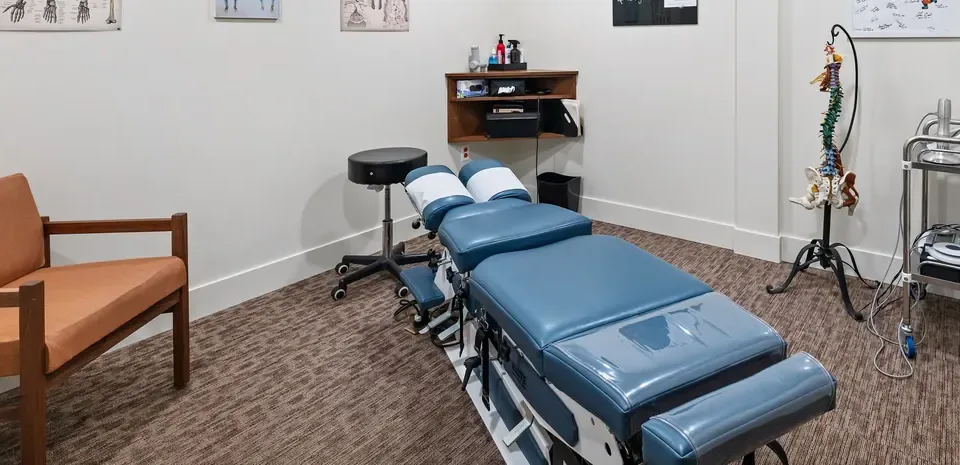
Flexion-Distraction & Spinal Traction in Saanichton
Often searched as spinal decompression. Our chiropractors use flexion-distraction on a motorized traction table, a gentle technique that takes load off the discs, joints and nerves of the lower and mid back.
It’s most often used for disc bulges and herniations, sciatica and other back pain that’s worse with sitting or bending. We combine it with hands-on care and exercise, so you leave with a plan, not just a table session.
No referral needed. Online booking 24/7, or call the front desk and we will find you a time.






Who it can help
- Disc bulges and herniations in the low back, with or without leg pain
- Sciatica and nerve pain travelling into the buttock or leg
- Lumbar spinal stenosis: leg pain or heaviness with standing and walking that eases when you sit or bend forward
- Facet joint irritation and stiffness from degenerative change
- Low back pain that’s worse with sitting, bending or lifting
- SI joint and pelvic pain alongside low back stiffness
How flexion-distraction works
You lie face down on the table while it moves in a controlled, rhythmic motion. The table can move to add traction through the lower back (lumbar spine) or mid back (thoracic spine), and it can angle to the side if needed. Your chiropractor stabilizes the segment being treated, which gently opens the spine and takes pressure off the disc and the joints behind it.
Straps and handholds let us increase the traction as needed, based on your comfort and preference. Each pass is slow and repeated, and your chiropractor adjusts the angle and force as you go. Because there is no twisting or quick thrust, it’s often used for patients who can’t tolerate other techniques while their back is sore.
- Reduces disc pressure: research measuring disc pressure has found flexion-distraction lowers pressure inside the lumbar disc.
- Opens the nerve space: flexion widens the openings where the spinal nerves exit, which can ease leg symptoms.
- Restores movement: gentle, repeated motion helps stiff joints move again.
- A good fit for lumbar stenosis: stenosis tends to tolerate flexion well, so the forward-bending motion of the table is usually comfortable and can ease leg symptoms.
- Research supports it for disc herniations: flexion-distraction has strong research support for disc herniations, and clinical trials have found it reduced chronic low back pain.
What a session looks like
- Assessment first: every patient starts with a thorough assessment. We look at joint movement, range of motion, muscle function, and do a neurological screen to rule out any serious cause, identify what’s behind your pain, and build a treatment plan around your findings.
- On the table: a few minutes of flexion-distraction or motorized traction, adjusted to your comfort.
- Hands-on care: joint mobilization, adjustment where appropriate, and soft tissue work for the surrounding muscles.
- Exercise: positions that ease your symptoms early on, then core, hip and lifting strength to protect your back long term.
Why we pair it with exercise
Research supports flexion-distraction for low back pain, including disc-related back and leg pain. It works best as part of a full plan: research supports a multimodal approach that combines manual therapy with exercise and education, so your sessions include both.
Our chiropractors work alongside registered massage therapists, an athletic therapist, and an acupuncturist under one roof, so your plan can include massage or athletic therapy if it helps. Back injuries from a car crash are covered under ICBC, and work injuries under WorkSafeBC.
Frequently Asked Questions
Is flexion-distraction the same as spinal decompression?
They’re closely related. “Spinal decompression” is a broad term for treatments that gently unload the spine. Flexion-distraction is one of them: your chiropractor uses a motorized traction table to open the spine in a slow, controlled rhythm. We don’t use a computerized decompression machine, and we’re happy to explain the difference at your first visit.
Does it hurt?
Most patients find it gentle and relaxing. You lie face down while the lower section of the table moves slowly, and your chiropractor adjusts the pressure to your comfort. Some people feel mild soreness afterward, which usually settles within a day or two.
How many sessions will I need?
It depends on your condition and how long you’ve had it. Many patients have a few sessions a week at first, then fewer as symptoms settle. We’ll reassess as we go and adjust your plan to your progress.
Do I need an MRI or a referral?
No. You don’t need imaging or a referral to start. We focus on your symptoms and exam findings, and we’ll recommend imaging only if it would change your care.
Is it covered by my extended health plan?
Flexion-distraction is part of your chiropractic treatment, so it’s billed at our regular chiropractic visit price. We direct bill most extended health plans, ICBC and WorkSafeBC.


Ready to book in Saanichton?
Open 6 days a week, 8:00am – 6:00pm. Direct billing to most extended health plans, ICBC and WorkSafeBC.