SI joint pain exercises work best when they calm the joint down and then build up the muscles that support your pelvis. The six moves below are the ones we use most often with patients at Saanichton Chiropractic Group: gentle, easy to learn, and simple to fit into your day. Keep every exercise pain-free, and if your pain is severe or not improving, get it assessed before pushing on.
If you would like a full assessment and a program built around you, you can book online here or call 250 223 0200. You can also read more about SI joint pain treatment in Saanichton.
What Is the SI Joint?
The sacroiliac (SI) joints sit on each side of the base of your spine, where the sacrum meets the pelvis. They are strong, tightly bound joints that move only a few degrees. Their job is to transfer load between your upper body and your legs every time you walk, climb stairs or lift something.
SI joint pain presents as pain at the base of the spine, often one-sided, with or without referral into the buttock or upper leg. It often flares with rolling over in bed, getting in and out of the car, climbing stairs, or standing on one leg to get dressed. It is common during and after pregnancy, after a fall onto the buttock, and in runners and other athletes.
Because SI joint pain can feel a lot like a lumbar disc, facet joint or hip problem, identifying the correct pain source helps guide treatment and healing. Our guide to back pain treatment in Saanichton covers the other common causes.
Why Exercise Helps SI Joint Pain
The SI joint relies on the muscles and ligaments around it for stability. The glutes, deep abdominals, inner thigh muscles and the muscles along the spine all help compress and steady the pelvis as you move. When those muscles are weak, tired or not working well together, the joint and the ligaments around it take more load and can become irritated.
Research supports a multimodal approach that combines manual therapy with exercise and education. Exercise for SI joint pain usually focuses on hip and core strength and on gradually rebuilding your tolerance to everyday load, rather than stretching the joint itself.
6 Exercises for SI Joint Pain
Start with the first three for a week or so, then add the others as your pain settles. Move slowly and stop any exercise that causes sharp or increasing pain.
1. Pillow Squeeze (Adductor Squeeze)
A simple, low-load exercise that switches on the inner thigh and deep core muscles that help steady the pelvis. It is often one of the first exercises we give for SI joint and pelvic pain.
- How to do it: Lie on your back with your knees bent and feet flat. Place a pillow or soft ball between your knees. Gently squeeze the pillow, about half your maximum effort, while breathing normally.
- Dose: Hold 5 to 10 seconds, 8 to 10 repetitions.
- Make it easier or harder: Do it sitting in a chair if lying down is uncomfortable. To progress, add a small glute bridge while you squeeze.
2. Glute Bridge
Strong glutes help support the SI joint with every step. The bridge trains them without loading the joint unevenly.
- How to do it: Lie on your back with your knees bent and feet hip-width apart. Tighten your stomach gently, then press through your heels to lift your hips until your body forms a straight line from shoulders to knees. Lower slowly.
- Dose: 2 to 3 sets of 10.
- Make it easier or harder: Keep the lift small at first. Progress by holding at the top for 5 seconds, then to a single-leg bridge once two legs feel easy.
3. Clamshell
Targets the side hip muscles (gluteus medius) that keep your pelvis level when you stand on one leg, walk or climb stairs.
- How to do it: Lie on your side with your hips and knees bent and your feet together. Keeping your feet touching and your pelvis still, lift your top knee a few inches, then lower slowly.
- Dose: 2 sets of 10 to 15 on each side.
- Make it easier or harder: Make it harder with a light resistance band just above the knees.
4. Bird Dog
Builds control of the trunk and pelvis together, the way they work in real life.
- How to do it: Start on your hands and knees. Keeping your back flat and your pelvis level, slowly reach one arm forward and the opposite leg back. Hold briefly, return, and switch sides.
- Dose: 8 to 10 slow repetitions per side.
- Make it easier or harder: Start by sliding just the leg back along the floor. Progress by holding each rep for 5 seconds.
5. Modified Side Plank
Works the deep side muscles of the trunk and hip that help stabilize the pelvis.
- How to do it: Lie on your side, propped on your elbow, with your knees bent. Lift your hips so your body is in a straight line from your head to your knees. Hold, then lower.
- Dose: Hold 10 to 20 seconds, 3 to 5 times per side.
- Make it easier or harder: Progress to a full side plank from your feet once the bent-knee version is easy and pain-free.
6. Gentle Glute Stretch (Figure Four)
Tight glute and deep hip muscles can add to buttock pain. A gentle stretch can ease that tension, as long as it stays comfortable.
- How to do it: Lie on your back with both knees bent. Cross one ankle over the opposite knee, then gently draw the bottom leg toward your chest until you feel a stretch in the buttock of the crossed leg.
- Dose: Hold 20 to 30 seconds, 2 to 3 times per side.
- Make it easier or harder: Keep it gentle. If it pinches at the front of the hip or increases your SI joint pain, skip it.
What to Avoid During a Flare
- Standing on one leg for long periods, such as pulling on pants or shoes while standing. Sit down to get dressed for now.
- Long strides, steep hills, running and jumping until the pain settles.
- Twisting or forceful stretches aimed at making the joint pop.
- Sitting cross-legged or with your weight shifted onto one hip for long periods.
- Lifting and twisting at the same time, especially with heavy loads.
Rolling over in bed with your knees together, and getting in and out of the car with both legs together, can also make a noticeable difference.
When to Get Your SI Joint Assessed
Exercise is a good first step, but it is worth getting assessed if your pain isn't settling after two to three weeks, keeps coming back, or is getting in the way of work, sleep or sport. It is also worth getting checked if you are not sure the pain is coming from the SI joint at all.
See a doctor promptly for low back or pelvic pain with fever, numbness in the groin area, changes in bladder or bowel control, or pain after a significant fall or accident.
How We Can Help in Saanichton
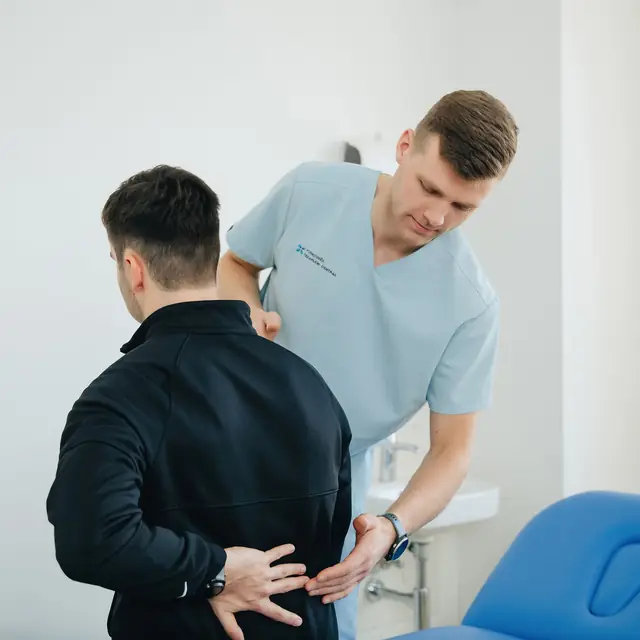
Care starts with a thorough assessment. We look at joint movement, range of motion, muscle function, and do a neurological screen to rule out any serious cause, identify what's behind your pain, and build a treatment plan around your findings. That includes telling SI joint pain apart from lumbar disc, facet, hip and sciatica problems.
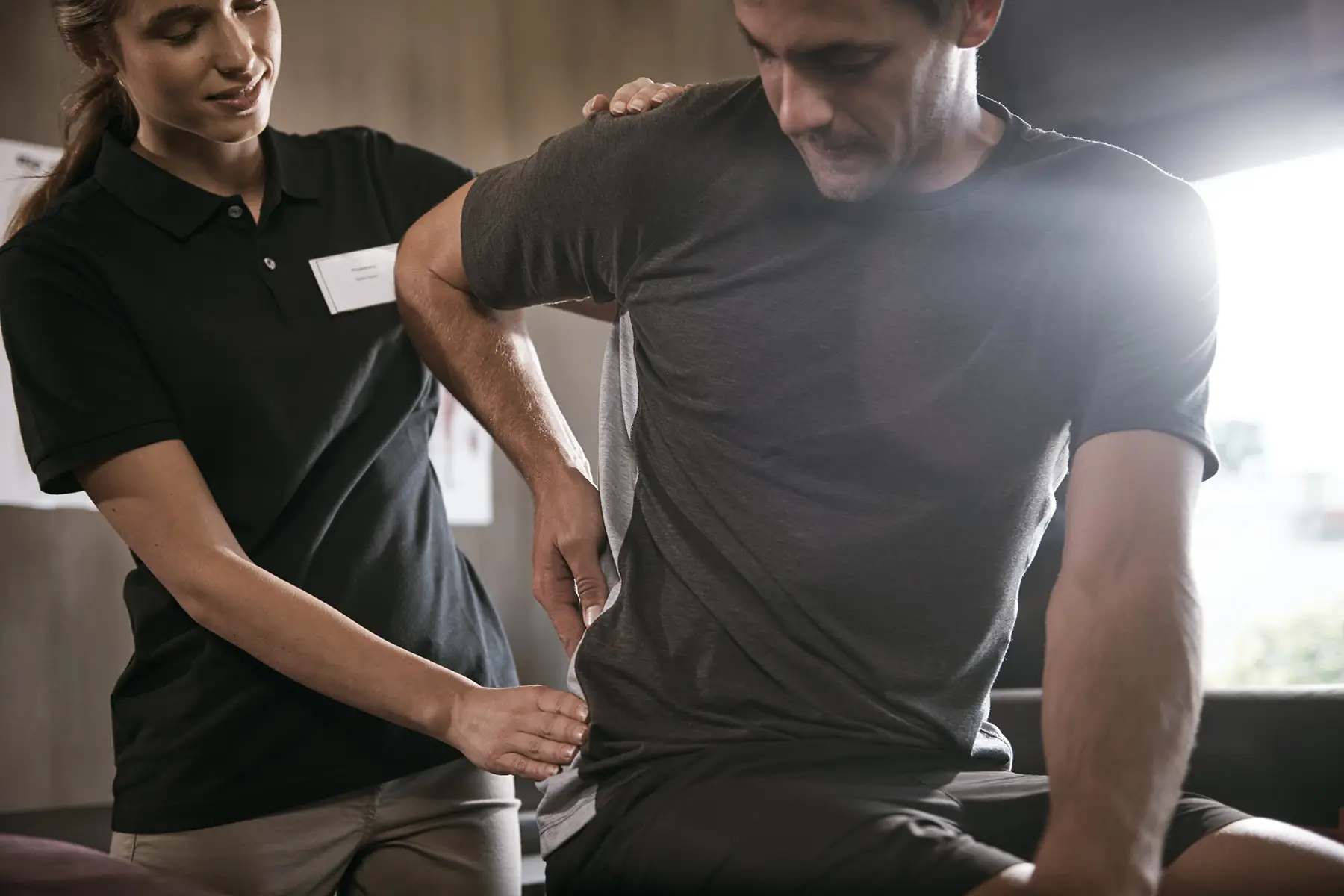
Our chiropractors work alongside registered massage therapists, an athletic therapist, and an acupuncturist under one roof. Depending on your assessment, care may include chiropractic joint mobilization and adjustment, soft tissue work for the glutes, hips and low back, registered massage therapy, flexion-distraction on our motorized traction table when SI joint pain comes with low back stiffness, and a progressive exercise program with our athletic therapist. For pelvic pain during or after pregnancy, see our pregnancy chiropractic care.
Chiropractic needs no referral, and we direct bill most extended health plans. If your pain started after a car accident, it can be covered under ICBC.
Frequently Asked Questions
Where is SI joint pain felt?
SI joint pain is usually felt low in the back, just to one side of the spine, around the dimple at the back of the pelvis. It can spread into the buttock, groin or back of the thigh, and it rarely travels below the knee.
What is the fastest way to relieve SI joint pain?
In the short term, staying gently active, using heat, avoiding long periods of standing on one leg, and doing pain-free exercises like bridges and the pillow squeeze tend to help most. A support belt can also ease symptoms for some people, especially during pregnancy. If pain isn't settling within a couple of weeks, get it assessed.
Can I pop or unlock my SI joint myself?
The SI joint only moves a few degrees, so it doesn't get stuck out of place the way people often describe. Forcing twists or trying to make it pop tends to irritate it more. Gentle movement and strengthening are a better choice, and an assessment can show what is actually driving the pain.
Is walking good for SI joint pain?
Usually, yes. Walking at a comfortable pace with a normal stride is well tolerated by most people. Shorter, more frequent walks are a good place to start during a flare, and avoid long strides or steep hills until it settles.
Are these exercises safe during pregnancy?
Most of them can be adapted for pregnancy, but skip lying flat on your back for long periods later in pregnancy and keep everything pain-free. Check with your midwife or doctor first, and see our pregnancy chiropractic care page for pregnancy-specific advice.
Book an SI Joint Assessment
If SI joint or pelvic pain is slowing you down, book online or call Saanichton Chiropractic Group at 250 223 0200. We are at 6981 E Saanich Rd #203 in Saanichton, open 6 days a week, and see patients from across Central Saanich, Sidney, Saanich and Victoria.
Dr. Mike Hadbavny, DC, FRCCSS(C), ICSC
If you are interested in learning more about how chiropractic care in Saanichton can be effective for your particular condition or health goals, contact Dr. Mike Hadbavny at 250 223 0200 today to make an appointment and discover the many benefits of seeing a chiropractor in Saanichton BC. Contact us today.