
The best exercises for spine health aren't complicated. A handful of simple moves that build core stability, strengthen your glutes and keep your back moving will do more for most people than any gadget or stretch routine. This guide walks through the eight exercises we give patients most often at Saanichton Chiropractic Group, how to do each one properly, how to progress them, and how to turn them into a complete spine conditioning program.
If you're dealing with back pain right now, start gently, stay within a comfortable range, and see the section on when to get assessed before pushing through anything sharp or radiating.
Why Exercise Is the Best Medicine for Your Spine
Clinical guidelines for back pain consistently put exercise near the top of the list, ahead of rest and passive treatment alone. Regular movement helps keep the discs nourished, the muscles that support the spine strong and responsive, and the nervous system less sensitive to pain. People who stay active also tend to have fewer and shorter flare-ups.
You don't need a gym to get the benefit. Canada's 24-Hour Movement Guidelines recommend that adults get at least 150 minutes of moderate-to-vigorous activity a week, plus muscle-strengthening activities at least twice a week. The routine below covers the strengthening side and takes about ten minutes.
The 8 Best Exercises for Spine Health
1. Cat-Cow
A gentle mobility exercise that moves the whole spine through flexion and extension. It's a good way to start the routine and to ease stiffness after sitting.
- How to do it: Start on your hands and knees with your hands under your shoulders and knees under your hips. Breathe in as you let your belly drop and lift your chest (cow), then breathe out as you round your back toward the ceiling (cat). Move slowly and only as far as is comfortable.
- Dose: 8 to 10 slow repetitions.
- Make it harder: Pause for a breath at each end of the movement, or add a gentle side-to-side wag of the hips between reps.
2. Pelvic Tilts
Teaches you to control the position of your lower back and pelvis, the foundation for every other exercise here.
- How to do it: Lie on your back with your knees bent and feet flat. Gently tighten your lower abdominals to press your lower back toward the floor, hold for a few seconds, then relax and let it return to its natural curve.
- Dose: 10 to 15 repetitions with a 3 to 5 second hold.
- Make it harder: Do them standing against a wall, or add a slow march (lifting one foot at a time) while holding the tilt.
3. Glute Bridge
Strengthens the glutes and hamstrings, the muscles that take load off your lower back when you lift, climb stairs and walk.
- How to do it: Lie on your back with knees bent and feet hip-width apart. Squeeze your glutes and lift your hips until your body forms a straight line from shoulders to knees. Avoid arching your lower back; the effort should come from your hips. Lower slowly.
- Dose: 2 sets of 10 to 15, holding the top for 2 seconds.
- Make it harder: Single-leg bridges, or a resistance band just above the knees.
4. Bird Dog
One of the best exercises for building core stability without loading the spine. It trains the deep back muscles and teaches your trunk to stay still while your arms and legs move.
- How to do it: On hands and knees, brace your core gently and slowly reach one arm forward and the opposite leg back until both are level with your body. Keep your hips square and your back flat, hold, then return and switch sides.
- Dose: 6 to 8 per side with a 5 to 10 second hold.
- Make it harder: Draw a small square in the air with your hand and foot while holding the position.
5. Dead Bug
A front-of-core exercise that builds control without the strain of sit-ups.
- How to do it: Lie on your back with arms reaching toward the ceiling and hips and knees bent to 90 degrees. Press your lower back gently into the floor. Slowly lower one arm overhead and the opposite leg toward the floor, keeping your back still, then return and switch.
- Dose: 6 to 10 per side.
- Make it harder: Straighten the leg further, or hold a light weight in your hands.
6. Side Plank
Strengthens the muscles along the side of the trunk that stabilize the spine during walking, carrying and twisting.
- How to do it: Lie on your side, propped on your forearm with your elbow under your shoulder. Start with your knees bent and lift your hips so your body is straight from head to knees. Hold, then switch sides.
- Dose: 3 to 5 holds of 10 seconds per side.
- Make it harder: Straighten your legs so you're balancing on your feet, then build up to longer holds.
7. Modified Curl-Up
A core exercise popularized by spine researcher Dr. Stuart McGill that trains the abdominals while keeping the lower back in a neutral position.
- How to do it: Lie on your back with one knee bent and the other leg straight. Slide your hands under your lower back to support its natural curve. Brace gently and lift your head and shoulders just a few centimetres off the floor, keeping your neck still. Hold, lower, and switch legs halfway through your set.
- Dose: 5 to 8 repetitions with a 10 second hold.
- Make it harder: Lift your elbows off the floor as you curl up, or add more repetitions rather than lifting higher.
8. Half-Kneeling Hip Flexor Stretch
Tight hip flexors from long periods of sitting pull on the lower back. This stretch opens the front of the hip without straining the spine.
- How to do it: Kneel on one knee with the other foot flat in front of you. Tuck your pelvis under slightly and squeeze the glute of the kneeling leg until you feel a stretch at the front of that hip. Keep your back tall rather than leaning forward.
- Dose: 2 holds of 30 seconds per side.
- Make it harder: Reach the arm on the kneeling side overhead and lean gently away from it.
A 10-Minute Daily Spine Routine
Do the exercises in this order, once a day or at least four or five days a week:
- Cat-cow: 8 to 10 reps
- Pelvic tilts: 10 reps
- Glute bridge: 2 sets of 10
- Bird dog: 6 per side
- Dead bug: 6 per side
- Side plank: 3 holds per side
- Modified curl-up: 5 reps
- Hip flexor stretch: 30 seconds per side
Finish with a 10 to 20 minute walk if you can. Walking is one of the best-tolerated activities for the spine and a great way to spread your 150 weekly minutes through the week.
Building a Full Spine Conditioning Program
Once the daily routine feels easy, the next step is general strength and fitness. The right program depends on your age, fitness level, experience and, most of all, your goals, but most people do well with a few building blocks:
- Resistance training twice a week. Squats, lunges, rows, push-ups and carries build the strength that protects your back during daily life. Learning to hinge at the hips (rather than rounding your back) is the single most useful movement skill for lifting safely.
- Interval training. If you're short on time, especially over 40, high-intensity interval training (short bursts of hard effort followed by rest) gives a lot of fitness benefit for the time invested. Almost any exercise can be used: hills, stairs, a bike or bodyweight moves.
- Train at home or outdoors. Greater Victoria's trails, a set of resistance bands or a kettlebell are all you need. Where you train matters far less than training consistently.
- Progress gradually. Add load, repetitions or new exercises a little at a time so your body has a chance to adapt.
Sore After Starting a New Routine? What's Normal
Muscle soreness a day or two after new or harder exercise is normal. It's called delayed onset muscle soreness (DOMS) and usually peaks 24 to 48 hours after a workout and settles within a few days. It feels like general achiness and stiffness in the muscles you worked, and it eases as you warm up.
To keep soreness manageable, introduce new exercises gradually, warm up before you start, sleep well, and keep moving with light activity like walking or easy cycling the next day. It's generally fine to keep exercising while sore, or to train other muscle groups while the sore ones recover.
Soreness is different from pain that signals a problem. Stop and get assessed if you notice sharp or stabbing pain, pain that travels down a leg, numbness or tingling, or soreness that's getting worse after five days instead of better.
Exercising With a Health Condition or During Pregnancy
Exercise is recommended for almost everyone, but a few situations call for adjustments. With osteoporosis, weight-bearing and strength exercises that load the hips and spine help maintain bone density, but deep, loaded forward bending should be avoided. During pregnancy, most people can continue moderate activity but should avoid exercises with a risk of falls or impact to the abdomen, and modify exercises done lying on the back if they feel lightheaded. With diabetes, regular aerobic and resistance exercise improves blood sugar control, with some precautions around blood glucose levels.
In all of these cases, check with your physician or a practitioner who knows your history before starting something new. We're happy to help adapt a program for you.
When to See a Chiropractor Instead
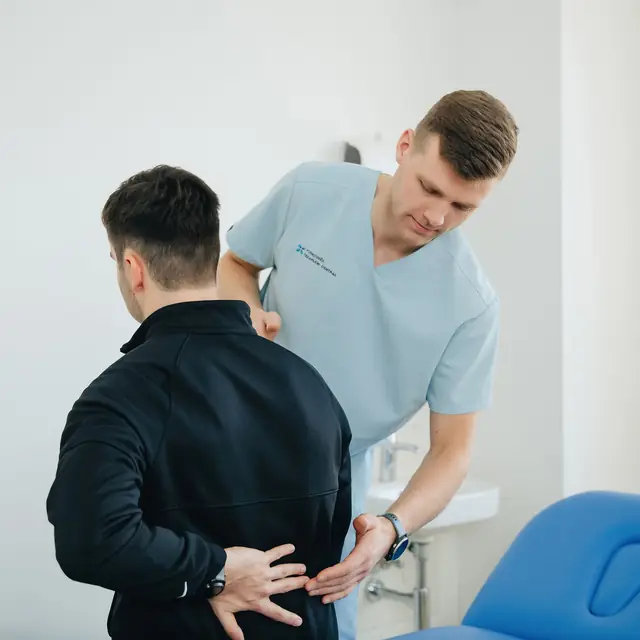
These exercises are a great foundation, but they aren't a substitute for an assessment if something isn't right. Book in if your back pain has lasted more than a week or two without improving, keeps coming back, travels into your buttock or leg, or limits your sleep, work or activity. A specific diagnosis tells you which exercises will help and which to avoid for now.
Seek emergency care right away if back pain comes with loss of bladder or bowel control, numbness in the groin, fever, or rapidly worsening leg weakness.
To understand what might be behind your pain, read our guide to the top causes of lower back pain, or learn about back pain treatment in Saanichton.
How We Help at Saanichton Chiropractic Group
Our chiropractors, athletic therapist and registered massage therapists work together to find the cause of your back pain, treat it, and build an exercise program that fits your goals, so you can keep your back healthy long after your pain settles.
Frequently Asked Questions
What is the best exercise for spine health?
There's no single best exercise, but bird dogs, glute bridges and side planks give the most benefit for the time they take, because they build core stability and hip strength without straining the spine. Combine them with regular walking for the best results.
How often should I do spine exercises?
The 10-minute routine above can be done daily or at least four to five days a week. Add full-body strength training twice a week and aim for 150 minutes of moderate activity like brisk walking.
Should I exercise if my back hurts?
Usually, yes. Gentle movement within a comfortable range tends to help back pain settle faster than rest. Avoid anything that causes sharp or radiating pain, and get assessed if your pain isn't improving.
Is walking good for your spine?
Yes. Walking is one of the best-tolerated forms of exercise for people with back pain and one of the easiest ways to stay active. Short, frequent walks are a great place to start.
Book an Assessment
If you'd like a program built around your back, your sport or your goals, book online or call Saanichton Chiropractic Group at 250 223 0200.
Dr. Mike Hadbavny, DC, FRCCSS(C), ICSC
If you are interested in learning more about how chiropractic care in Saanichton can be effective for your particular condition or health goals, contact Dr. Mike Hadbavny at 250 223 0200 today to make an appointment and discover the many benefits of seeing a chiropractor in Saanichton BC. Contact us today.