Most shoulder pain settles with time, good advice and the right exercise. Some tendon problems don't. If your shoulder has been sore for months, keeps you up at night or flares every time you reach overhead, shockwave therapy is one of the options we may discuss with you at Saanichton Chiropractic Group.
This post covers which shoulder conditions shockwave is used for, what a session is like, and how it fits into a full treatment plan. For a general overview of the treatment, see our shockwave therapy page. If you're not sure what's causing your pain, start with our shoulder pain page.
What Is Shockwave Therapy?
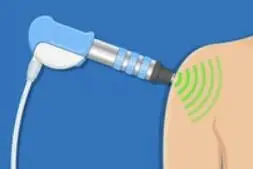
Shockwave therapy (extracorporeal shockwave therapy, or ESWT) delivers short, strong pulses of acoustic energy through the skin into a tendon or the tissue around it. It is non-invasive: there are no needles, no medication and no downtime. The pulses stimulate a healing response in tendons that have stalled, and can reduce pain sensitivity in the area.
Shoulder Conditions Shockwave Is Used For
- Calcific tendinitis: calcium deposits in the rotator cuff tendons. This is the shoulder condition with the strongest research support for shockwave.
- Rotator cuff tendinopathy: long-standing irritation of the rotator cuff tendons, often in people who work or train with their arms overhead.
- Shoulder impingement-type pain: pain at the front or side of the shoulder when lifting the arm, usually alongside a rotator cuff problem.
- Biceps tendinopathy: pain at the front of the shoulder from the long head of the biceps tendon.
Shockwave is not used for a fresh injury, a suspected full-thickness tear, a dislocation or a frozen shoulder in its painful early stage. Your chiropractor will assess your shoulder first and tell you honestly whether shockwave is a good fit.
What a Session Is Like
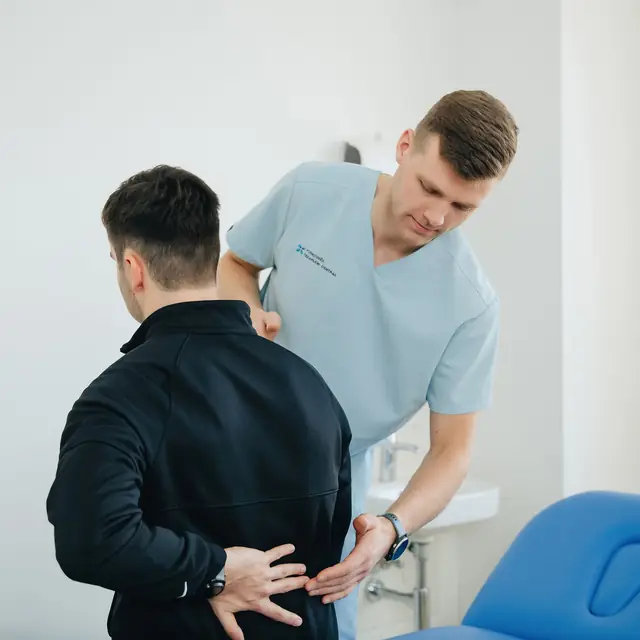
We start with a full assessment of your shoulder, neck and upper back. If shockwave is appropriate, a small gel-coated handpiece is placed over the sore area and the pulses are delivered for a few minutes. Most people describe it as a strong tapping that can be uncomfortable over the most tender spot. We adjust the intensity to what you can tolerate.
Treatment usually takes 3 to 6 sessions, about a week apart. Many people can go about their normal day afterwards, though the area may feel sore for a day or two.
Why Shockwave Works Best as Part of a Plan
Shockwave helps calm a stubborn tendon, but the tendon still needs to get stronger. That's why we combine it with a progressive rotator cuff and shoulder blade strengthening program, hands-on work for the neck and upper back, and advice on adjusting training, work or sleep positions while the shoulder settles. Our registered massage therapists and athletic therapist can be part of that plan too.
Is Shockwave Right for You?
Shockwave may be worth discussing if:
- Your shoulder pain has lasted more than about three months
- You've already tried rest and exercise without much change
- An ultrasound or X-ray has shown calcific tendinitis or tendinopathy
- You'd like to avoid or delay injections or surgery
It isn't suitable for everyone. For example, it isn't used during pregnancy, over areas with active infection or tumours, or in some people on blood thinners. We'll go through your health history before any treatment.
Book a Shoulder Assessment in Saanichton
Saanichton Chiropractic Group is at #203 – 6981 East Saanich Road, Saanichton, and is open Monday to Saturday, 8am to 6pm. No referral is needed. Shockwave is often covered under extended health plans when provided by a chiropractor, and we direct-bill most major insurers.